
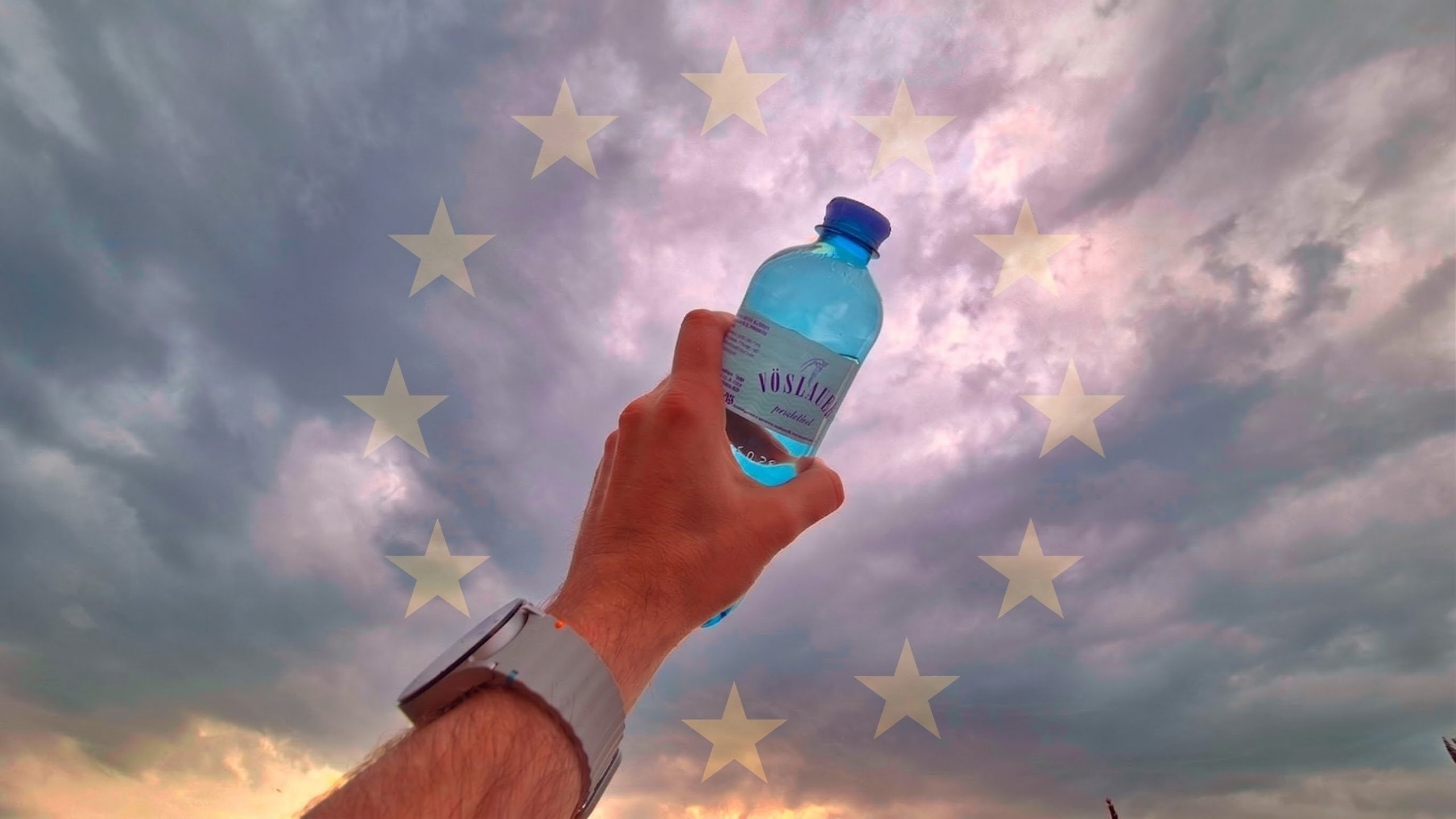
There are a lot of opinions out there comparing the innovations in the US, China, and Europe. Some point to the prominent innovators being America’s OpenAI, China’s DeepSeek, and Europe’s non-detachable bottle caps. Some argue that Europe is over-regulated to produce anything remotely competitive with the US, which excels in innovation, and China, which excels in speed and execution.
Europe does get credit as a place for good life-balance, manageable work hours, guaranteed vacations, parental leaves, and retirement plans. So arguably, it is good for comfortable living. But tech? Nah.
However, if you look closely, Europe actually has quite a lot to offer across many areas of technology.
AI? Mistral. Black Forest Labs. DeepL.
AI-based tools? Eleven Labs. Synthesia. Lovable. n8n.
Robots? 1X. PAL.
Semiconductors? ASML.
HealthTech? Novo Nordisk.
XR? Varjo. Ultraleap.
Space? The Exploration Company. Isar Aerospace. ICEYE.
Simulators? PaleBlue.
In this list, there are some obvious leaders. Take Novo Nordisk or ASML, with world-leading positions in their respective sectors. In many other segments, Europe may not always come first or second, but it still produces highly competitive companies. It creates a degree of geographic resilience and reduces dependence on foreign technologies in strategically important sectors.
The consumer internet race is not currently being won in Europe, but Europe remains highly competitive in deep tech and industrial technology.
Behind these technologies are European companies emerging from startup hubs across the continent. London, Paris, and Berlin are the heavyweights, while Munich, Stockholm, and Amsterdam are strong runner-ups.
For a startup economy to work, you need universities, access to industry, and capital. Universities and industrial ecosystems can be found in many European hubs. Capital, however, remains more unevenly distributed. Many startups still have to travel to another EU country or to the UK to raise funding. Some ultimately go to the US. Access to capital remains one of Europe’s biggest weaknesses, with overall venture deal volume having declined for several years in a row, both globally and across Europe.
Europe also has funding mechanisms beyond traditional VC capital, including EU and national grants. Sometimes they work well. Sometimes they produce abandoned developments, due to wrong incentives. There are also new initiatives such as InvestAI, which aims to mobilize €200 billion in total investment to strengthen Europe’s AI sovereignty. Then there is the EIC Accelerator, through which companies can secure millions in funding if their applications succeed. Europe is aware that it is not currently at the forefront of the global innovation economy – and it is trying to change that.
Perhaps Europe is not so clueless after all. Where will it be in 50 years? There are many factors at play – politics, demographics, the global economy, energy, and surrounding conflicts among them. All of this makes predictions difficult. Europe may never look like Silicon Valley. And perhaps it shouldn’t.
Still, Europe has a real chance to become one of the world’s leading innovation powerhouses. Not by copying the US or China, but by building on its own strengths. Go Europe!